Background and Contact
I am a fifth year PhD candidate in the UB Glacier Modelling Lab. I completed my BS in Environmental Science with a minor in Mathematics. I investigated Ocean Acidification in the Northern Bay of Bengal from 2017 – 2018 for my undergraduate senior thesis. I joined GML to learn and understand how sea level rise is going to affect low-lying coastal countries like Bangladesh.
For my doctoral research, I have been working on an automated detection method to locate crevasses and predicting their locations for the future projections on the Greenland Ice Sheet.
Feel free to reach me at naureenk at buffalo dot edu if you have any questions! ✨

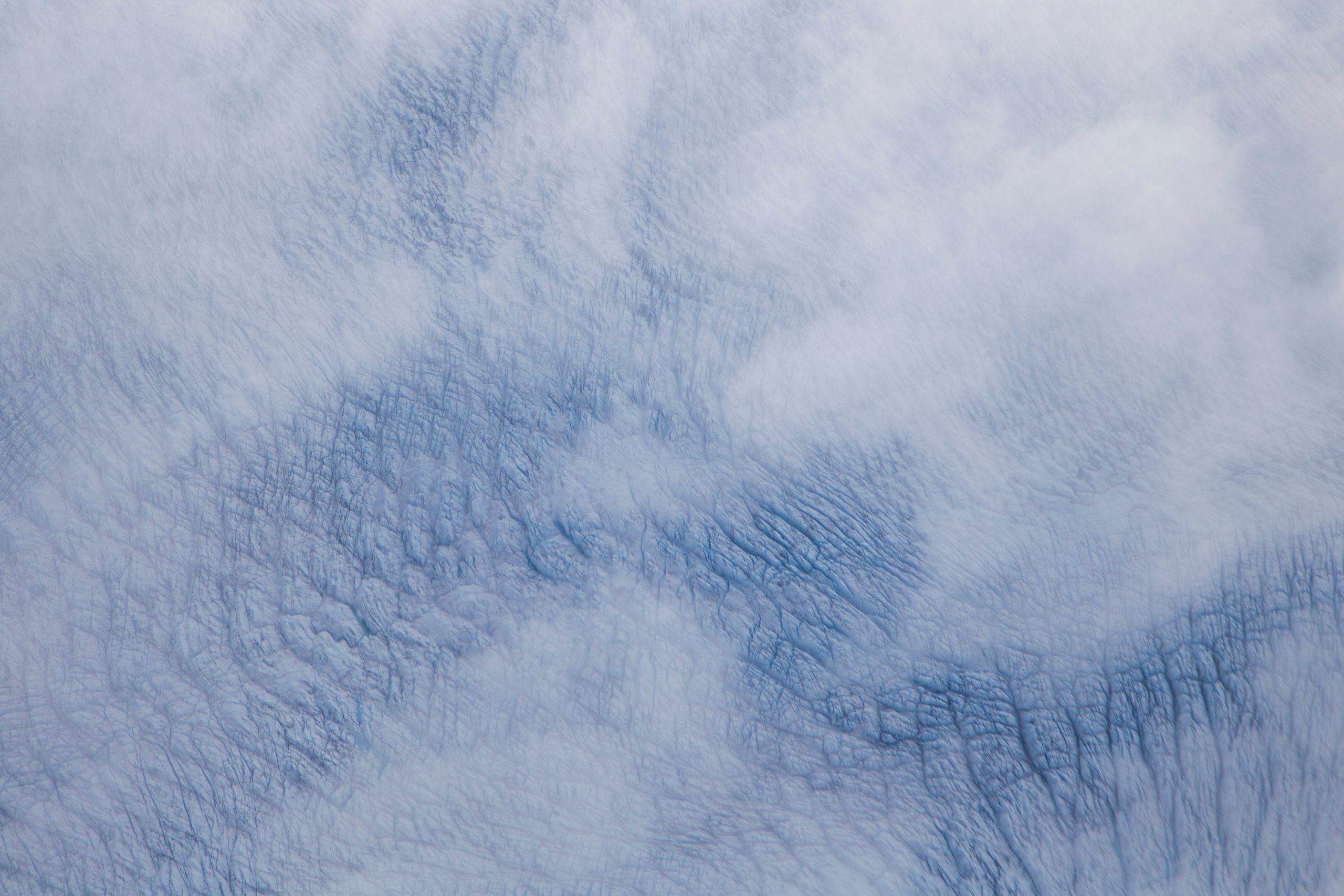
Credit: Jeremy Harbeck, NASA Goddard Space Flight Center
Research Updates
Year V
My workflow with MimiNet to detect crevasse fields from Sentinel-1 SAR imagery was published on Ghub as an user-friendly Jupyter Notebook. A manuscript describing this work titled Steady crevasse locations in Pâkitsoq, Greenland over one decade was accepted at the Journal of Glaciology and available as open-access.
My future goal is to predict crevasses for future centuries to interpret and improving global sea level rise projections using Ice Sheet Models.
Year IV
I have been working on devleloping a user-friendly Jupyter Notebook on Ghub where one can run and train MimiNet on Sentinel-1 January 2020 median imagery and use it for detecting crevasses in the centralwestern Greenland from Sentinel-1 wintertime imagery.
I also used MimiNet predictions to study the spatial variability and persistence of crevassed regions in my study area in Pakitsoq from 2015-2024.
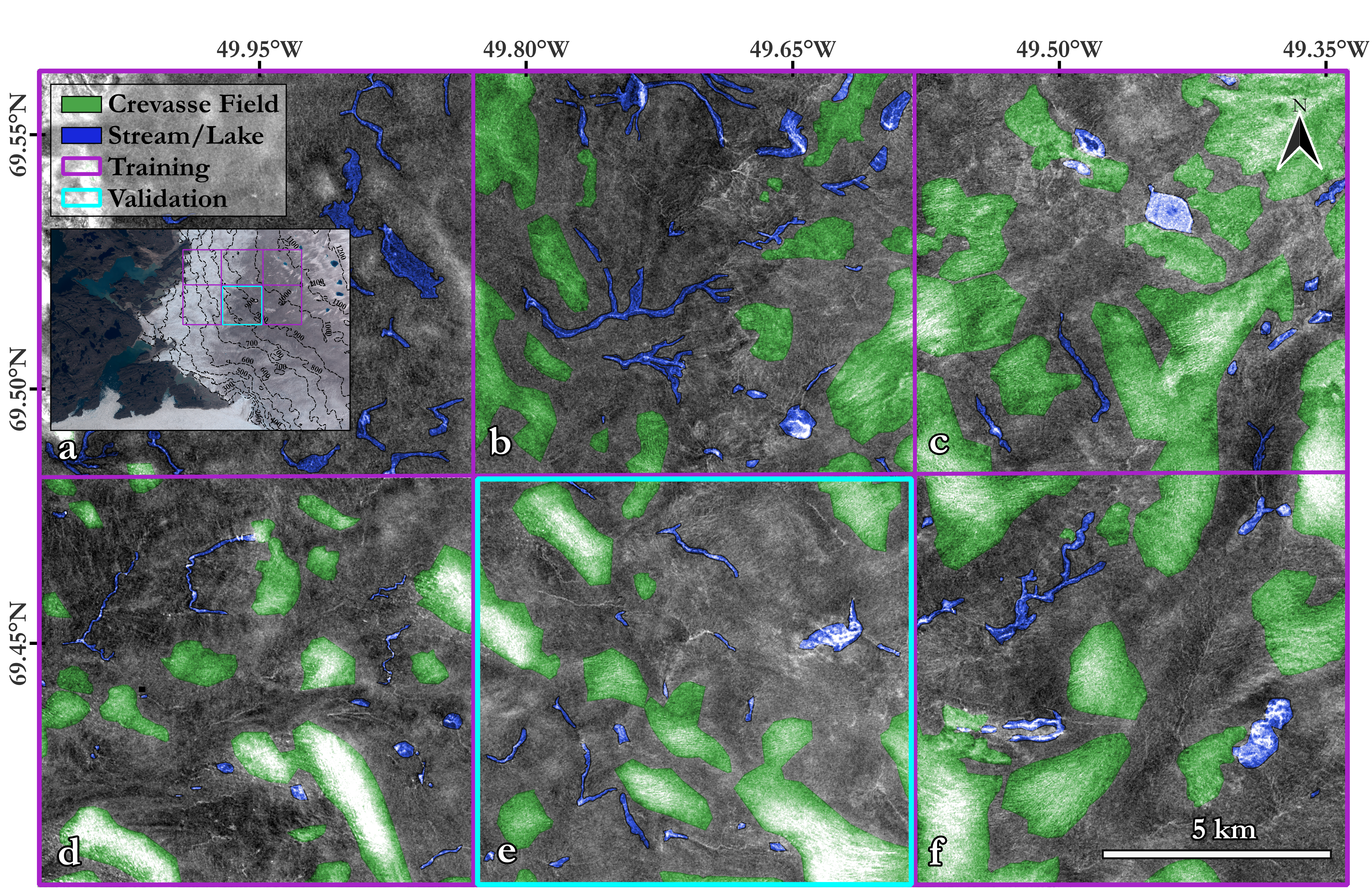
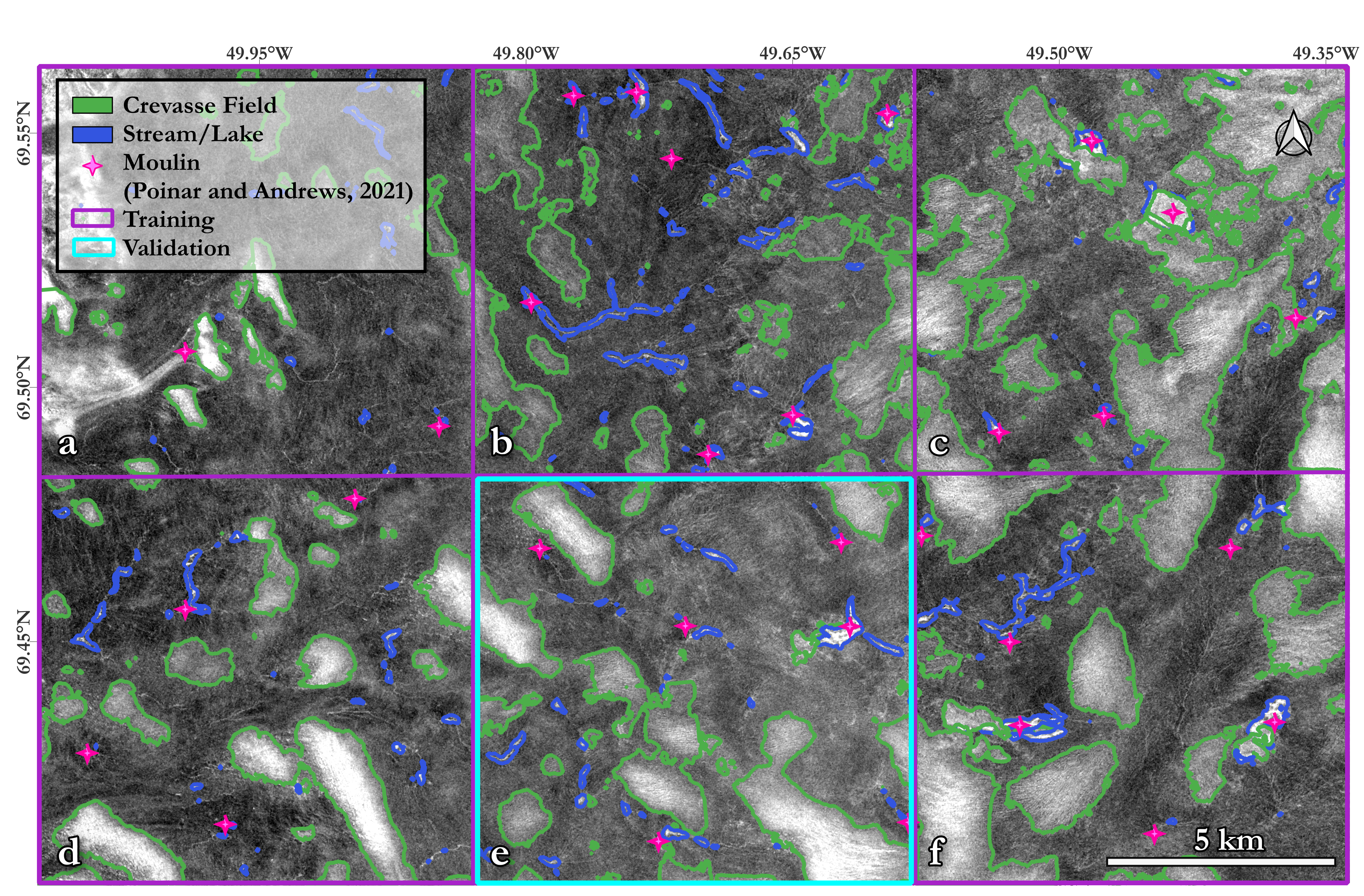
Left: Manually digitized ground truth labels of Crevasse Fields, Supraglacial Streams/Lakes and six sub-regions of training and validation dataset for training Crevasse Detection model. Labels overlain on Sentinel-1 SAR (Synthetic Aperture Radar) Level-1 Ground Range Detected (GRD) HH single co-polarization January 2020 median scene of Pakitsoq, Greenland used for training. Sentinel-2 inset map shows Pakitsoq study area with Bedmachine surface elevation 100-m contour bands.
Right: Multiclass model detections overlain on the same Sentinel-1 SAR scene from Pakitsoq. Potential locations of moulins displayed as pink stars from Poinar and Andrews (2021).
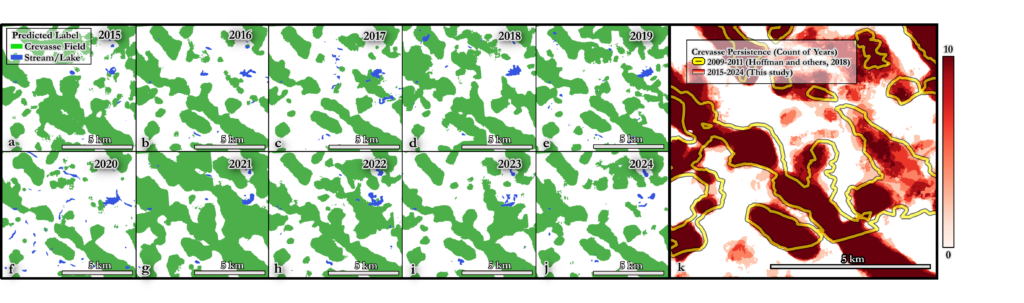
a-j) Model detections of crevasse fields and supraglacial streams/lakes on Region E from 2015-2024. k) Map of total crevasse field detections over the 10-year study period. Red shading denotes the total number of counts over 2015-2024, with white meaning no detections and deep red meaning crevasse fields detected all 10 years. Yellow polygons show crevasse fields detected by Hoffman et al., 2018 in 2009-2011 for comparison.
Year III
I developed a Deep Convolutional Neural Network named MimiNet modified from U-Net (Akeret et al., 2017) to automatically detect crevasses on the Greenland Ice Sheet from Sentinel-1 Synthetic Aperture Radar satellite imagery in Google Earth Engine. I adapted this workflow using an open-source machine learning framework named TensorFlow on the Jupyter Notebooks hosted on Ghub. I also studied the literature to understand the process and occurrence of crevasse initiation in glaciers and on an ice-sheet scale.
Year I and II
I focused on learning Machine Learning methods and exploring satellite imagery datasets on Google Earth Engine. I studied about different object-based detection models to find the optimal model to detect crevasses from Satellite Imagery. Using Google Earth Engine, my task was to study the differences between Optical and SAR-based remote sensing in terms of selecting the optimal acquisition method that would provide the highest visibility of crevasses on Greenland.
Meetings and Workshops
I am going to present a research talk on Current elevation limit of crevassing in western Greenland in the Machine Learning in the Cryosphere I Oral Session at American Geophysical Union (AGU) 2025 Fall Meeting hosted in New Orleans, Louisiana. I am going to talk about my findings on where the interior limit of crevassing on ice sheet is using deep learning and machine learning algorithms.
I am also co-convening and co-chairing Ice Fracture Processes: Observations and Modelling Poster Session at AGU 2025 Meeting.
I presented a research talk on Crevasse Locations and Meltwater Delivery to the Bed in Pakitsoq, Greenland at Northeast Glaciology Meeting 2025 hosted in Ithaca, New York. I presented my findings on crevasse fields draining meltwater to the bed along with moulin-drained areas on a 630 km2 area in Pakitsoq, centralwestern Greenland.
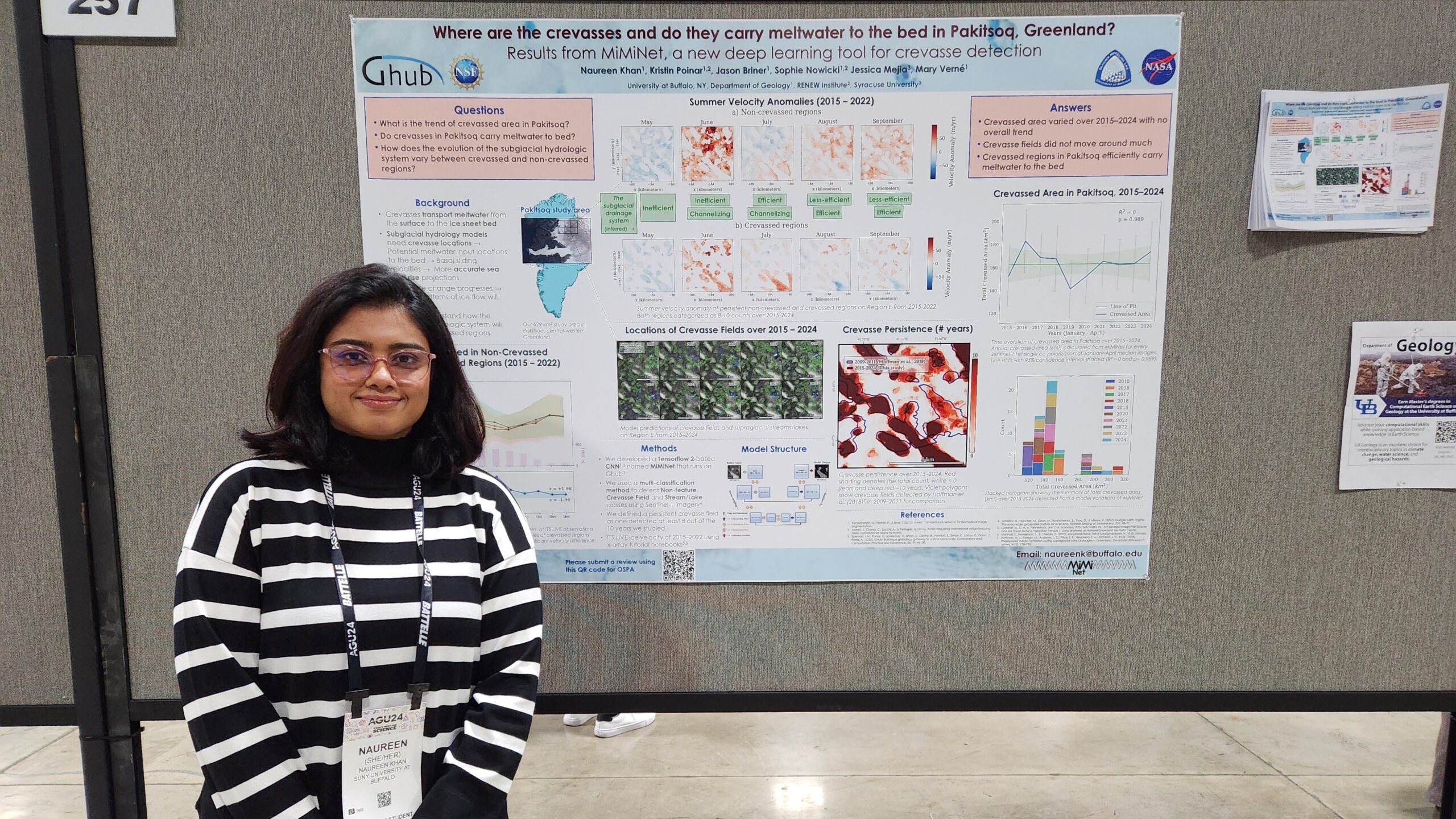
I presented my poster on Where are the crevasses and do they carry meltwater to the bed in Pakitsoq, Greenland? Results from MimiNet: A new deep learning tool for crevasse detection at American Geophysical Union (AGU) 2024 Fall Meeting. I presented the crevasse detection results of the MimiNet on a January 2020 median scene from Sentinel-1 on a 30 km x 20 km area of Pakitsoq and I used the ITS LIVE ice velocity observations from 2015-2022 to study the seasonal evolution of the subglacial drainage system underneath crevassed and non-crevassed areas.
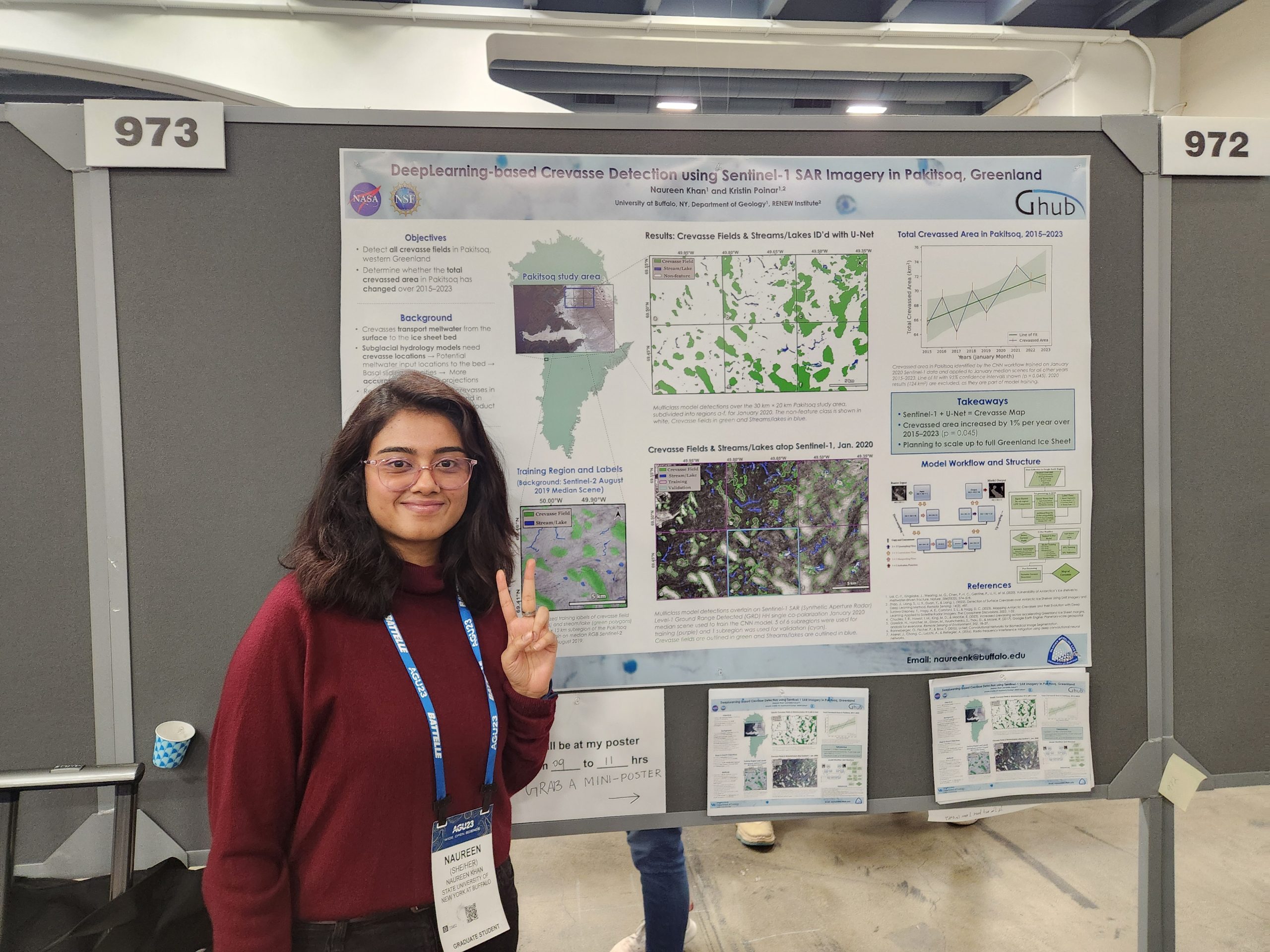
I presented my poster on DeepLearning-based Crevasse Detection using Sentinel-1 SAR Imagery on Pakitsoq, Greenland at American Geophysical Union (AGU) 2023 Fall Meeting. I presented the prediction results of the Crevasse Detection model on a January 2020 median scene from Sentinel-1 on a 30 km x 20 km area of Pakitsoq.
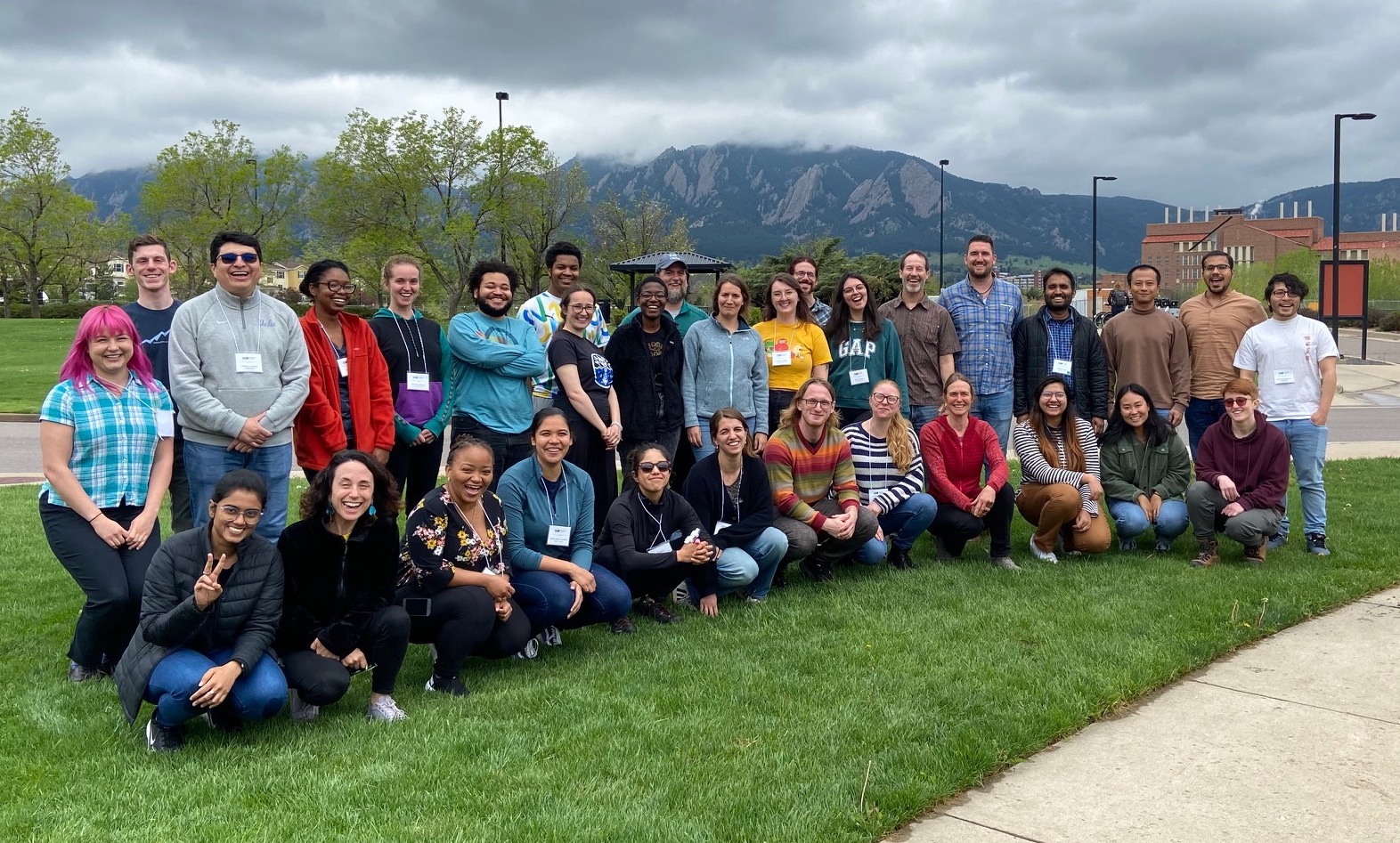
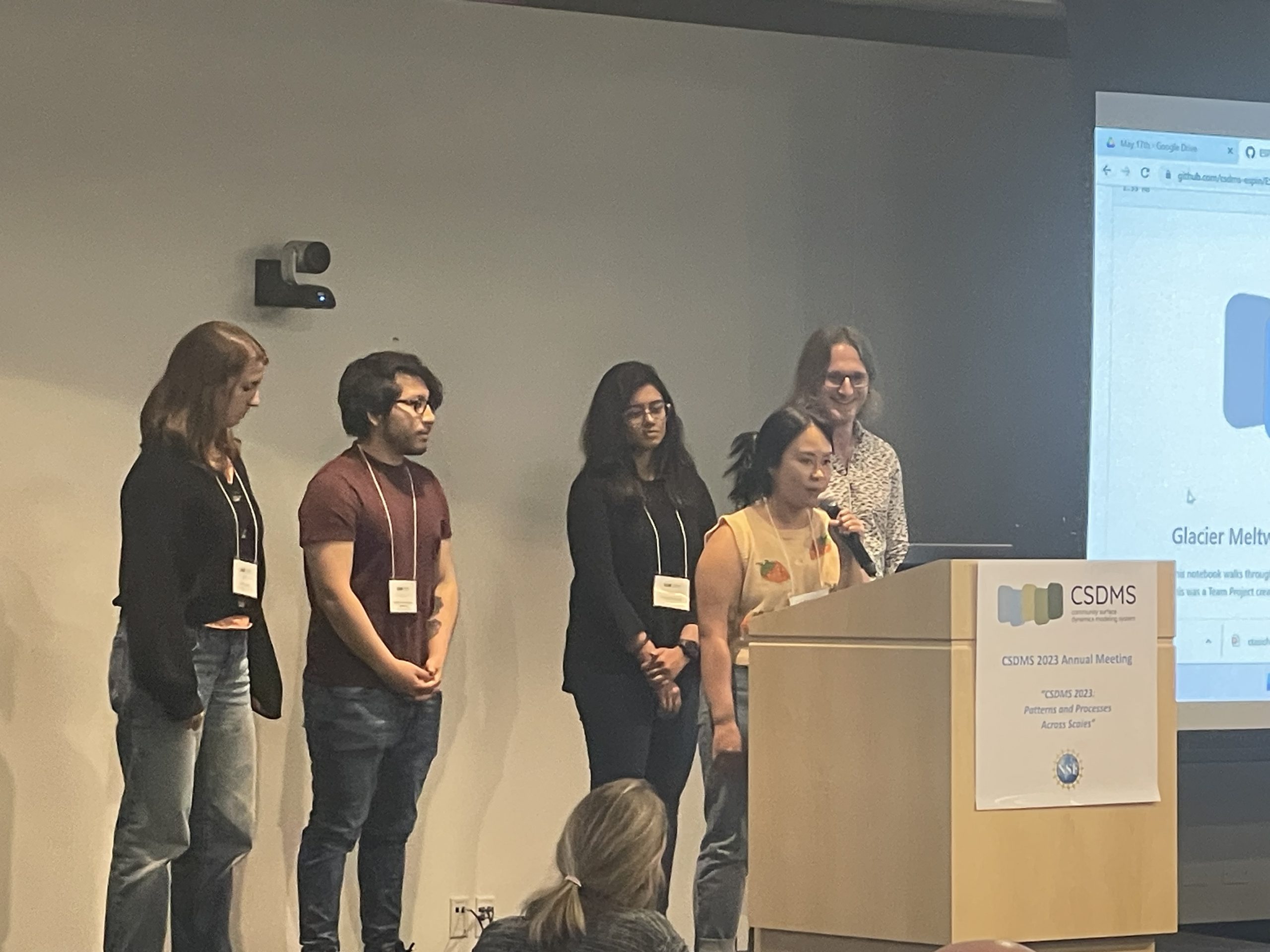
I participated in the six-day Earth Surface Processes Institute (ESPIn) Spring School 2023 at the Community Surface Dynamics Modeling System (CSDMS) in Boulder, Colorado. I had an amazing week at Boulder where I learnt a lot of cool stuff and made great connections. I was part of the Glacier Team, we presented our Jupyter Notebook on Glacier Meltwater Routing module built using Landlab water routing components at CSDMS Landlab tool at CSDMS Annual Meeting 2023.
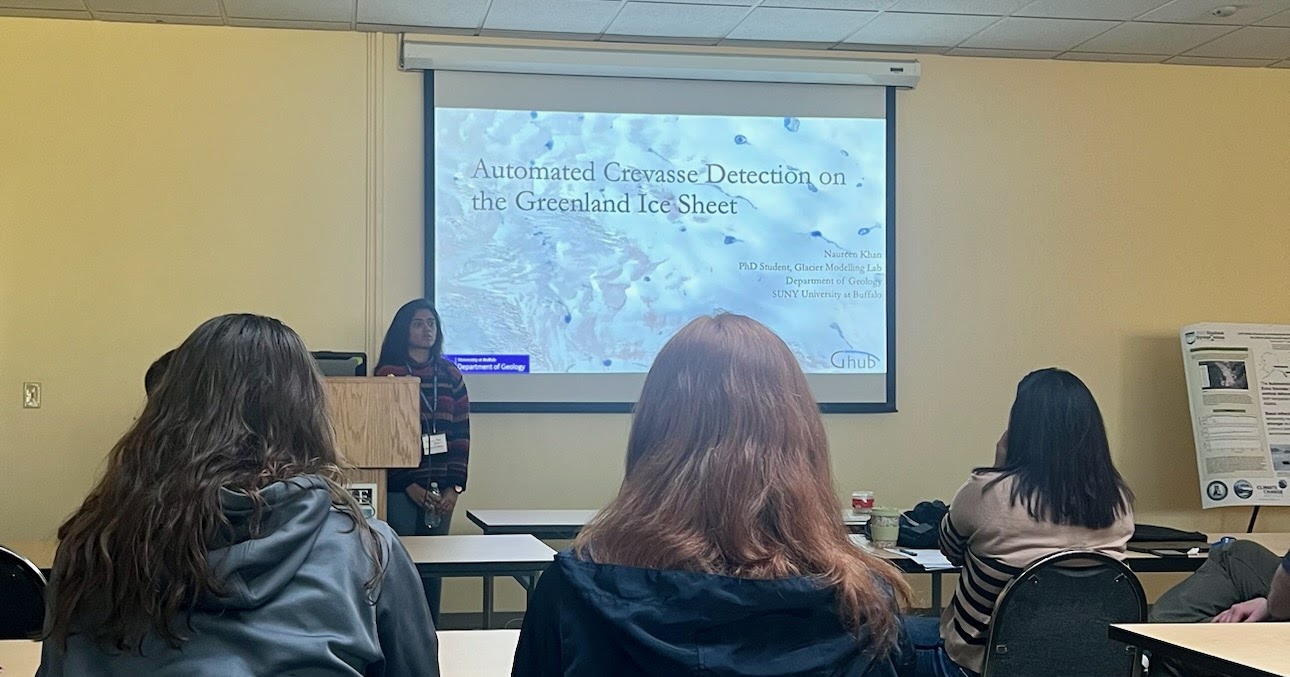
I attended and presented my research talk on “Automated Crevasse Detection on the Greenland Ice Sheet” at the Northeast Glaciology Meeting (NEGM) 2023 hosted at the University of Maine.