About Me:
Hi! My name is Kniya Duncan, and I am a Second-year MS/PhD student at the University at Buffalo working with Dr. Kristin Poinar in the Glacier Modeling Lab. I am interested in studying cryoseismology and what it can tell us about the world’s cryo regions.
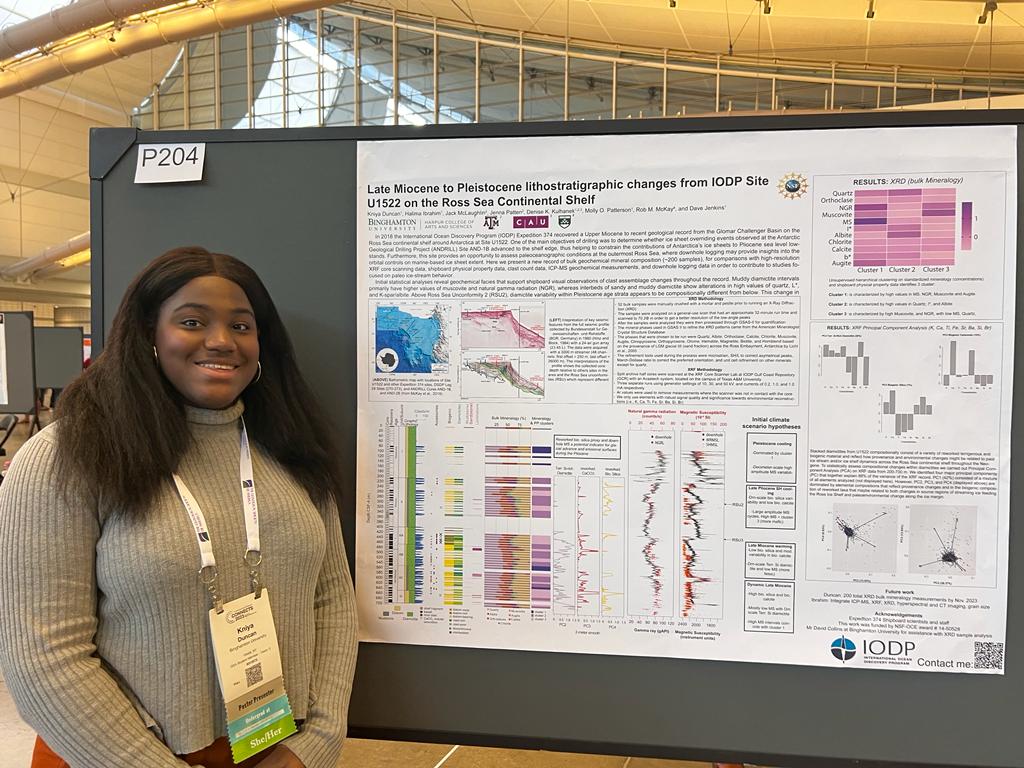
I completed my undergraduate degree in Geology at Binghamton University. During my time at Binghamton, I was a part of their Paleoclimate lab under the guidance of Dr. Molly Patterson studying Late Miocene to Pleistocene lithostratigraphic changes from IODP Site U1522 on the Ross Sea Continental Shelf. Throughout my undergraduate career I was also apart of two REU’s; At Tulane University where I analyzed coastal ice cores from Mt. Murphy in Antarctica, and at Columbia University LDEO where I traced a subglacial Precambrian geologic boundary in Greenland through gravity and magnetic anomalies. I have presented my work at WAIS Workshop, AGU, and GSA.
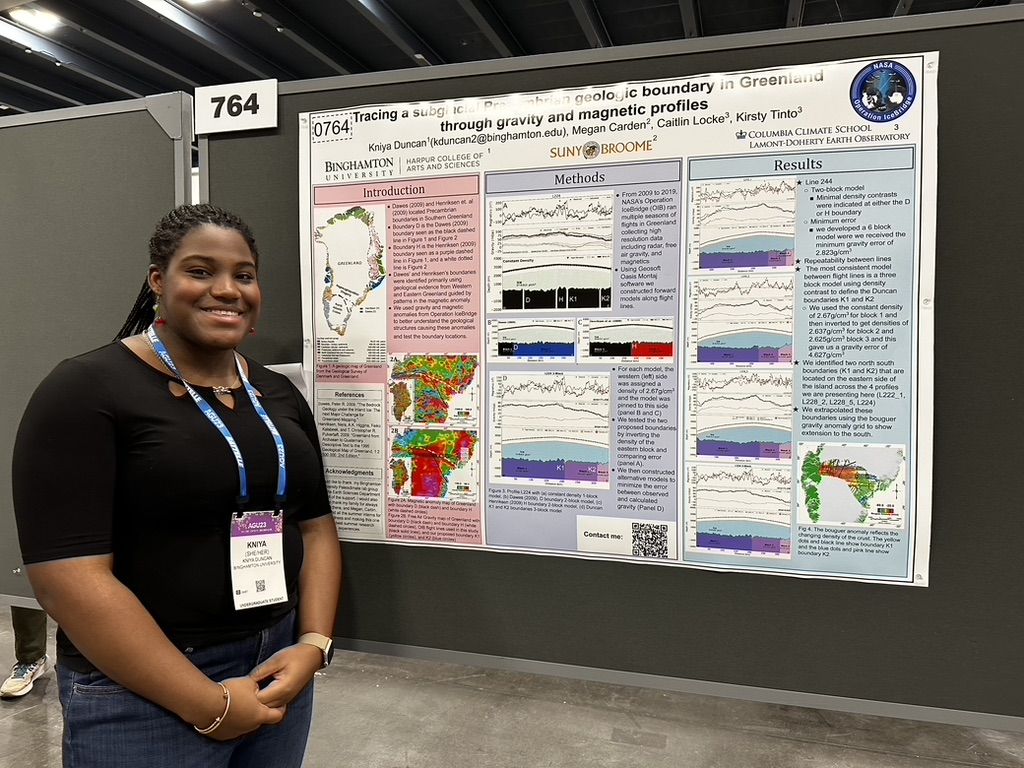
Presenting my LDEO REU research at AGU December 23′
Presenting my undergraduate research at GSA October 23′
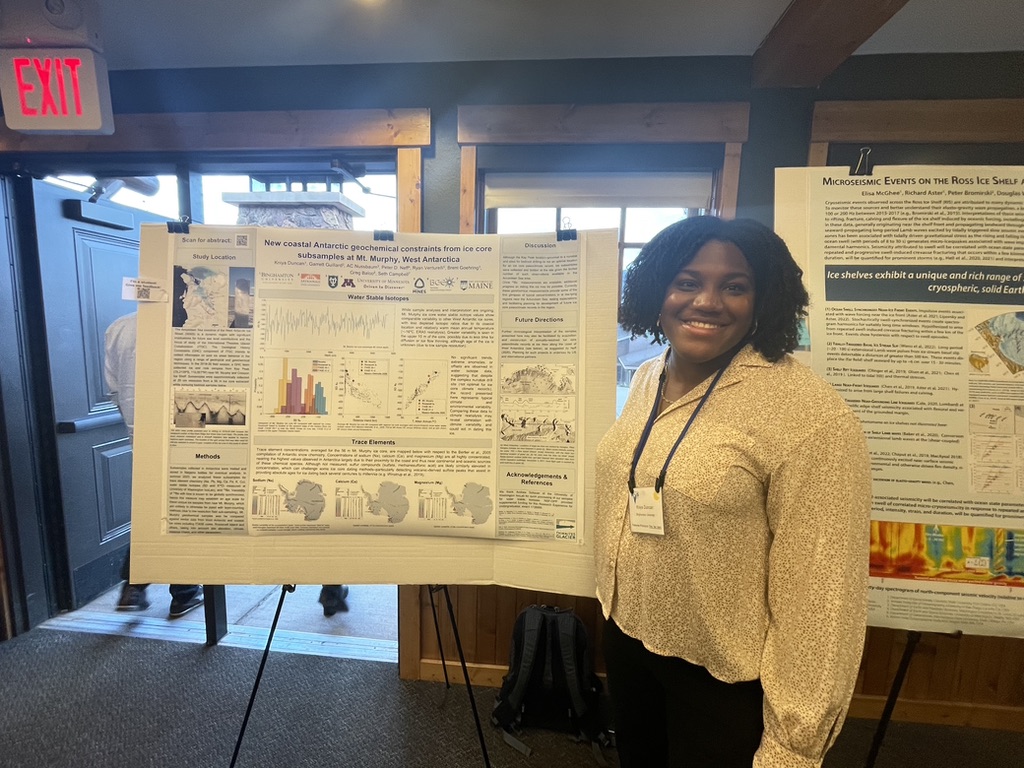
Presenting my Tulane University REU research at WAIS Workshop October 22′
M.S.
For my M.S., I have been exploring the influence a firn aquifer has on a crevasse field. My study location is Helheim Glacier in Southeast Greenland. In Summer 2025, I went to Helheim to collect seismic data for my research. During my field season, I collected 14 days of continuous data, which contained ~200 crevassing events detected per day. To determine if the firn aquifer influence, I need to locate the crevassing icequakes in 3D (XYZ). These locations will show how deep the event it and which part of the crevasse field are they occurring. At our study site, there is a established crevasse field and a younger crevasses field, that surrounds our seismometers. Locating these events will tell us which section of the crevasse field is more active. We can also include a temporal aspect as well, to determine if these events are only occurring at certain times of day.
During my M.S. I have had the opportunity to present my work at four conferences:
NEGM 2025 — April 2025, Ithaca NY
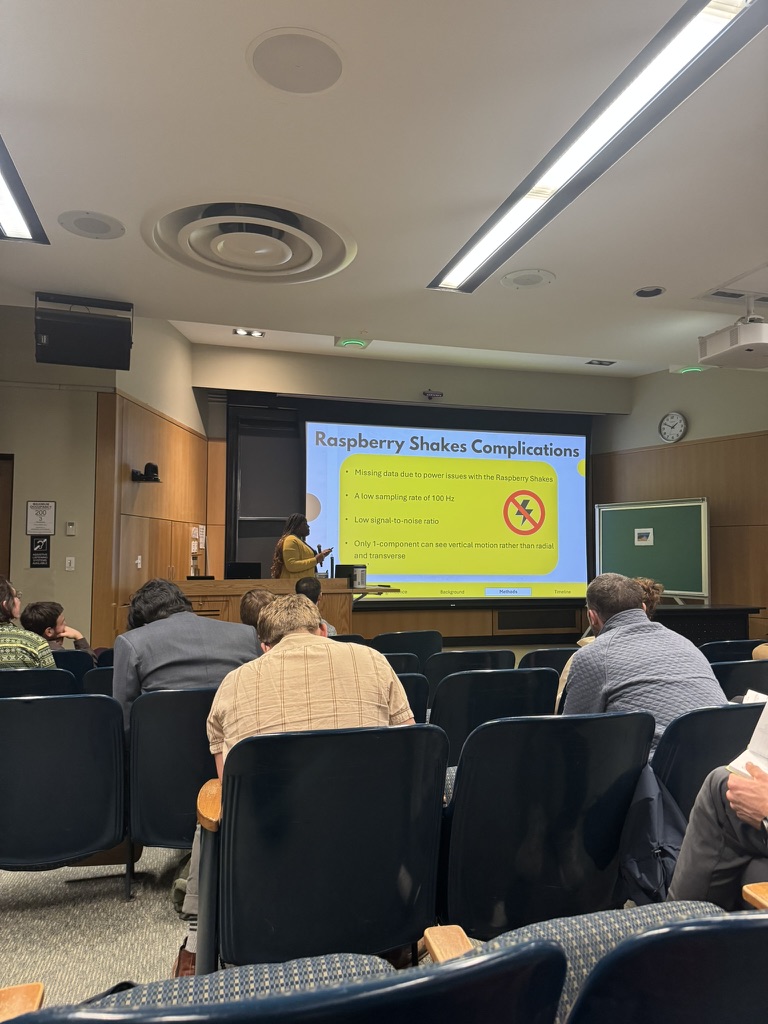
Environmental Seismology — October 2025, Denver CO
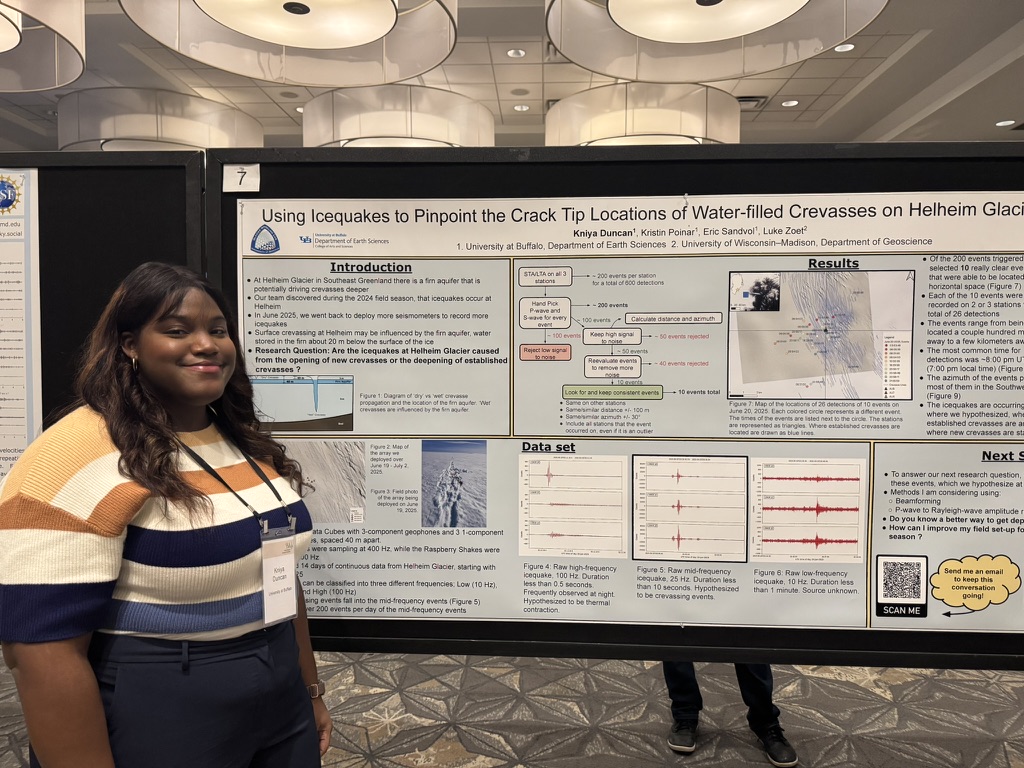
AGU — December 2025; New Orleans, LA
NEGM 2026 — April 2026; Buffalo, NY
I will be defending my M.S. in Spring 2026.
Field Season 2025
In June of 2025, I had the opportunity to go to Greenland to deploy seismometers on Helheim Glacier. This field season was a blast. This was my first time ever completing field work. To go from Buffalo, NY to Tasiilaq, Greenland was an easier journey than one might think. We flew from Buffalo to Boston, Boston to Keflavik, and Keflavik to Kullusk. We then took a boat from Kullusk to Tasiilaq.
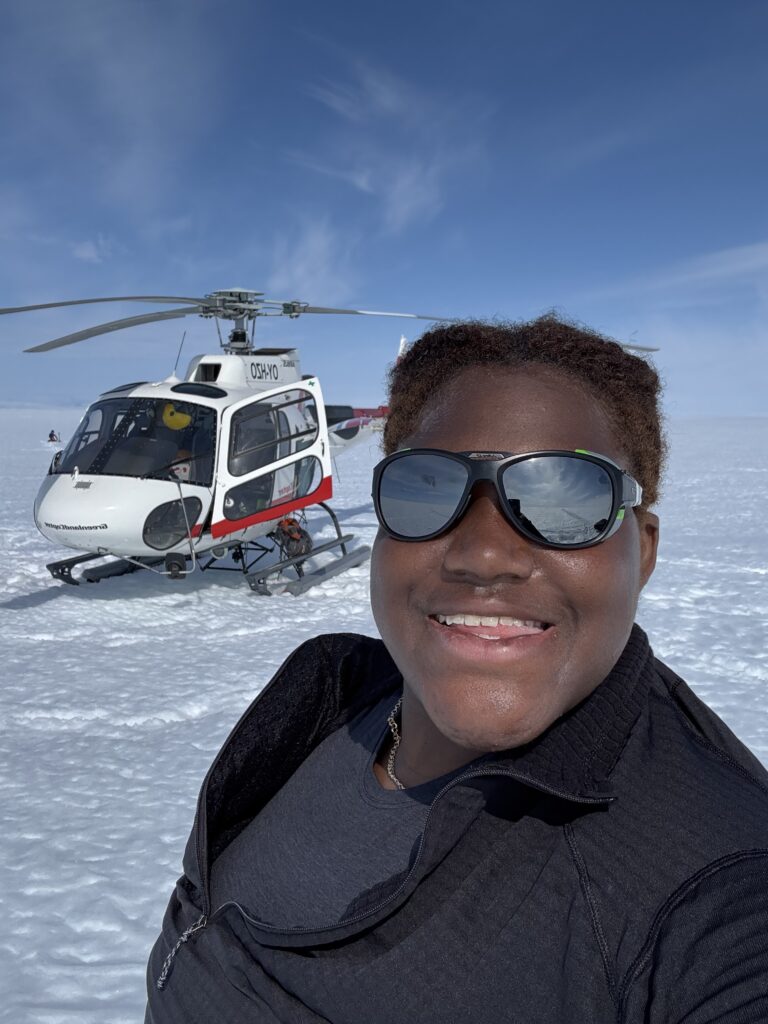
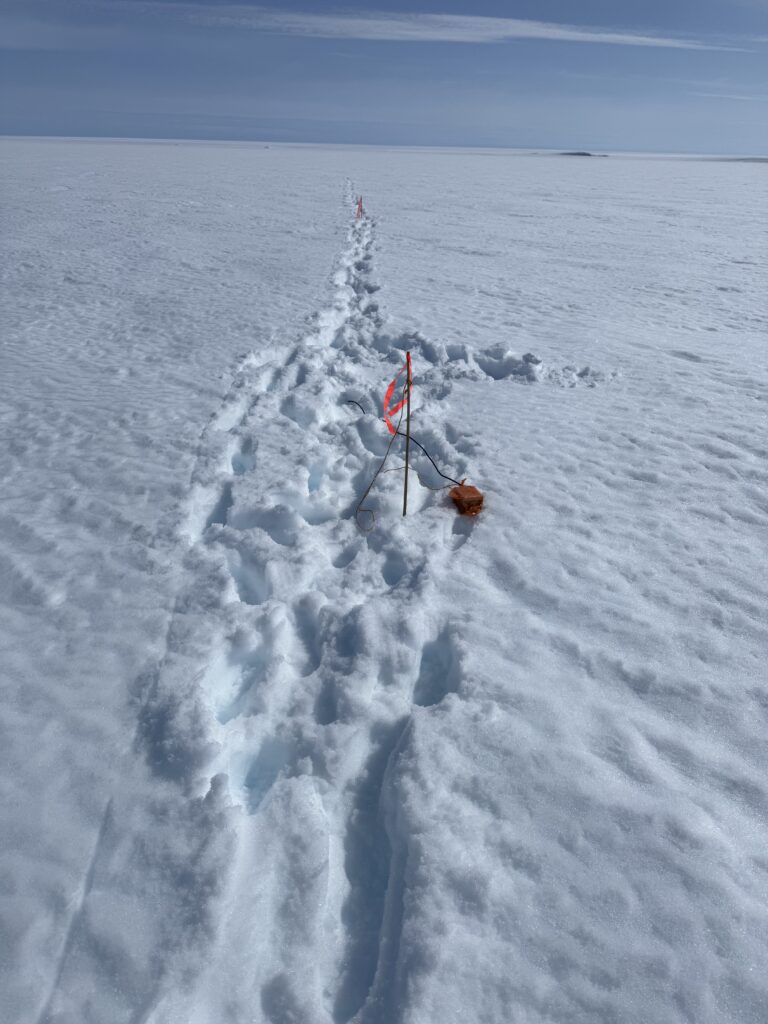
For field work on Helheim, we would helicopter to and from Tasiilaq. All trips were day trips, so we did not camp on the ice. I completed two deployments at Helheim, one 8-day deployment with 6 seismometers and a 6-day deployment with 10 seismometers.
In addition to Helheim, I also visited two other glaciers to deploy seismometers. I went to Mittivakat Glacier and deployed the seismometers for 4 days. I also traveled to Apusiaajik Glacier, where I deployed seismometers for 2 hours.
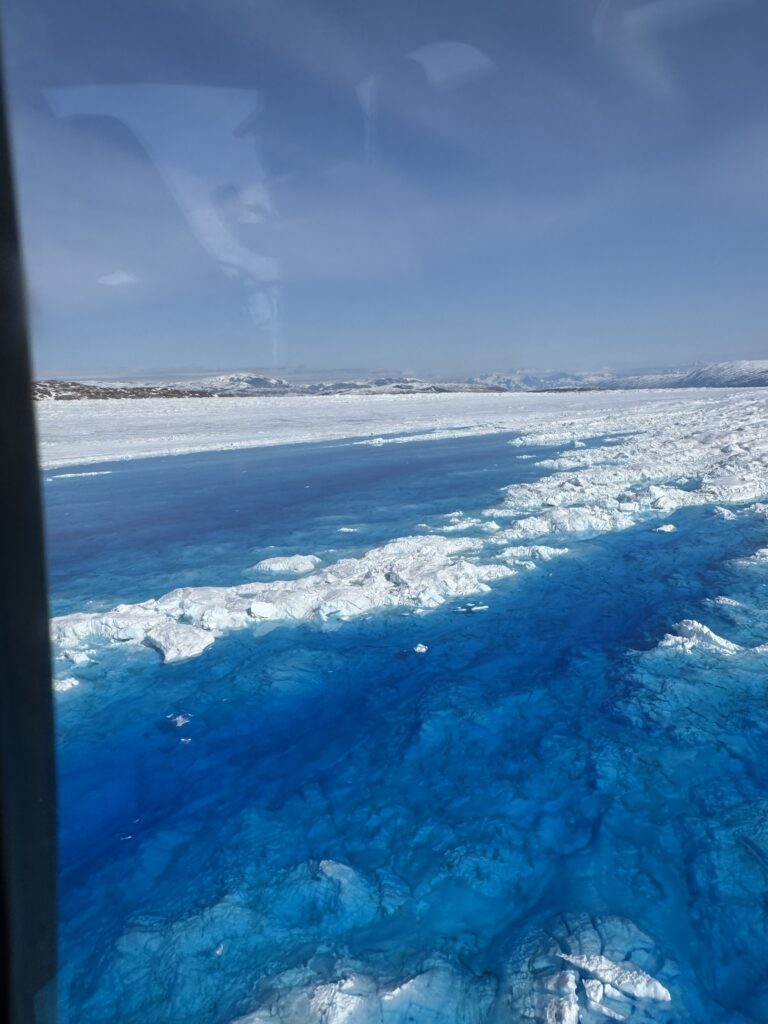
It was awesome to see what a glacier looks like up close and in person. My favorite glacial feature that I got to witness is a supraglacial lake. They are bluer than you can imagine.
Here are some pictures from this field season 2025: