

In a new research paper published in the Journal of Politics, we consider how race-centered coursework influences public opinion among college students. This is important because college student bodies have diversified over the past few decades. As such, many colleges and universities are offering courses on race and ethnicity to meet student demand, especially in response to contemporary events, such as protests for racial justice in the summer of 2020. There has also been pushback against educational initiatives that center race and diversity, with several states restricting such activities at public universities in recent years.
While researchers have explored the impact of these courses on civic engagement, less is known about their consequences for public opinion, particularly as college student bodies become more racially diverse. How does taking courses focused on racial and ethnic diversity shape students’ perceptions of racial issues and policy views?
Our main prediction is that taking these courses increases college students’ awareness of racial inequality and support for inclusive racial policies. However, we expect the magnitude of these changes to vary across racial groups, with the largest changes among White students and students from immigrant groups with limited prior exposure to the topics these courses cover, such as Asian Americans and Latinos.
Assessing the impact of race-centered coursework using two multi-wave student surveys
We analyze this question using two multi-wave surveys of college students. The first survey, fielded by the Cooperative Institutional Research Program (CIRP), includes over 100,000 students who attended more than 600 colleges and universities nationwide over several decades. The CIRP survey interviewed the same students as they began and completed college. The second survey was conducted at a single diverse public university over several terms. The researchers interviewed students during the first and last weeks of large introductory political science courses focused on a range of topics. Since both surveys interviewed the same students at multiple time points, we were able to examine changes in their political attitudes before and after taking race-centered courses.
Taking ethnic studies courses affects perceptions of racial discrimination
First, we consider the impact of taking ethnic studies courses on students’ perceptions of discrimination in the CIRP survey across all four major racial groups. As Figure 1 shows, taking ethnic studies is associated with a decrease in perceptions that discrimination is no longer a problem of about two percentage points, controlling for characteristics of students, including political ideology, parental income, citizenship, gender, intended major, and the universities they attended, such as geographic region and attending an HBCU. When we break down the sample by race, these patterns hold for White, Black, and Latino students. We do not find statistically significant associations among Asian American students, which may be due to the smaller sample size.
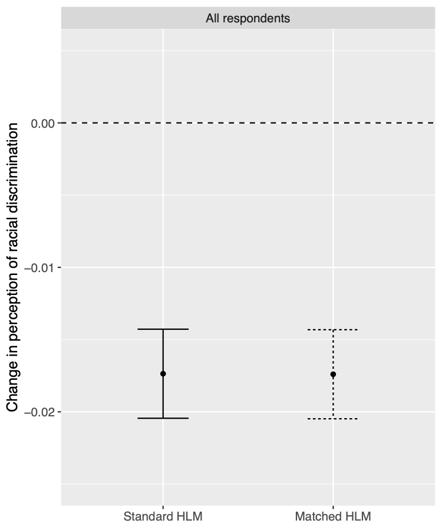
Fig. 1: Association between taking ethnic studies and changes in perceptions of discrimination
A limitation of this analysis is that we are unable to distinguish between students who were required to take an ethnic studies course and those who chose to take one. However, several aspects of our research design address this limitation. These include the panel nature of the data and the use of statistical techniques, such as matching the sample based on factors that influence the likelihood of enrolling in ethnic studies. We also supplement this analysis with a more nuanced study focused on race-centered political science courses at a single institution.
Race-centered political science courses shape students’ policy views
Next, we conducted an original panel study over several terms at a large public institution to explore the impact of race-centered coursework in political science. Several hundred students were interviewed at the beginning and end of introductory political science courses on Race, Ethnicity, and Politics (REP); American Politics; International Relations (IR); and Political Theory. We examine changes in racial attitudes among students across these introductory political science courses and then compare attitude change among those who took a REP course with that of those who took the other “placebo” political science courses.
As Figure 2 shows, students who took the REP course saw an average seven-percentage-point decrease in racial resentment and an eight-percentage-point increase in support for affirmative action. Additional analyses highlighted in the paper show that these changes were less consistent among students who took introductory courses in American Politics, Political Theory, and IR. These patterns also largely hold among White, Asian American, and Latino students.[1]
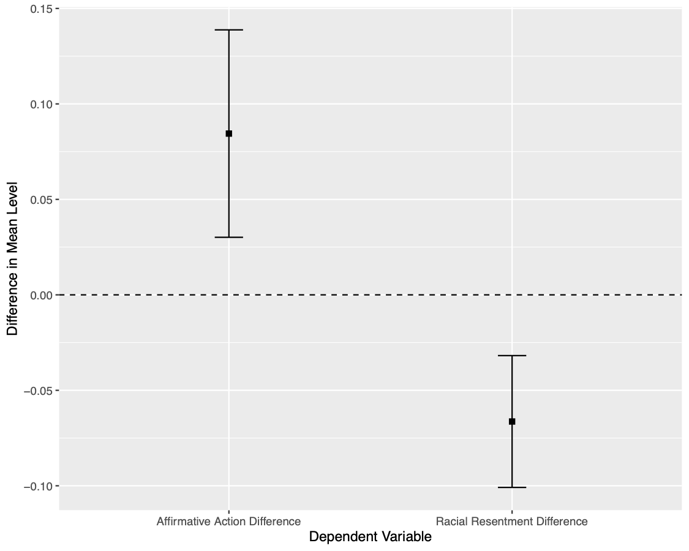
Fig 2: Differences in racial outcomes before and after completing REP course
Implications for contemporary conversations about race and education
In general, this research finds that race-focused coursework shapes students’ attitudes and policy views. These courses foster more inclusive perspectives among students across racial groups. As such, they may improve intergroup relations as college campuses become more diverse.
We caution that this research cannot speak to the impact of diversity requirements since the courses in these studies were not required. Nevertheless, this work might help inform curricular decisions taking place at colleges and universities nationwide. This is particularly relevant during a period in which many are advocating for inclusive educational initiatives, while others push back against them.
https://www.journals.uchicago.edu/doi/pdf/10.1086/735704
Nathan Chan is an Assistant Professor of Political Science at Loyola Marymount University.
Tanika Raychaudhuri is an Assistant Professor of Political Science at Rice University.
[1] The sample of Black students was not large enough for a subgroup analysis.