

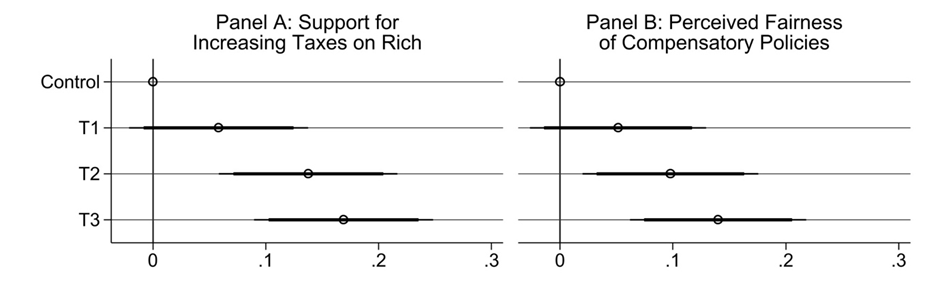
According to the compensatory theory of tax fairness, people support raising taxes on the rich when they perceive them to have benefited from unequal state action. This idea has been used to explain the historically high top marginal tax rates following the two world wars. In this context, while the poor were risking their lives for their country, many argued that the rich were not sacrificing as much —and some were even benefiting from the war industry. Higher taxes were thus seen as a way to compensate for this unequal treatment by the state and ensure that the war burden was shared more fairly across society.
Leave a CommentThe Journal of Politics Blog Posts
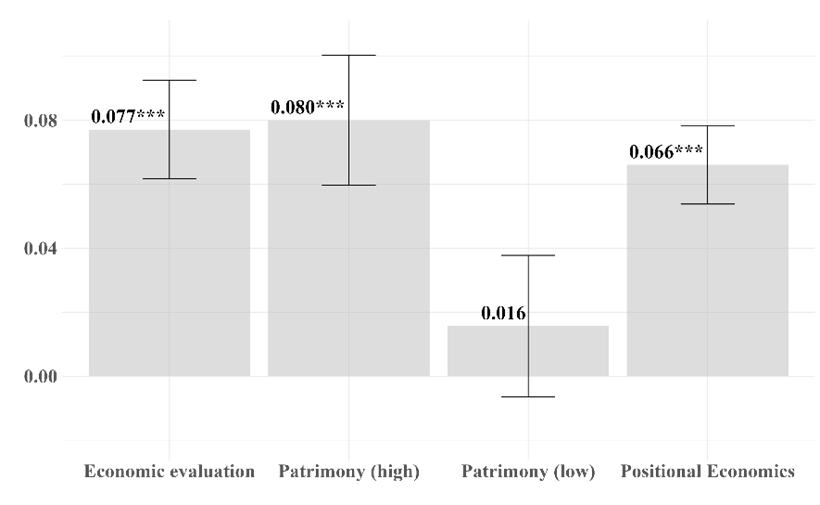
The conventional story of economic voting is simple: when the economy does well, incumbent governments get re-elected; when it is in decline, they get punished. But advancements in the economic voting literature suggest that the compleat economic voter is multidimensional, with valence (i.e., the assessment of economic performance) as only one dimension, alongside economic policy position and patrimony (i.e., ownership of assets).
Leave a Comment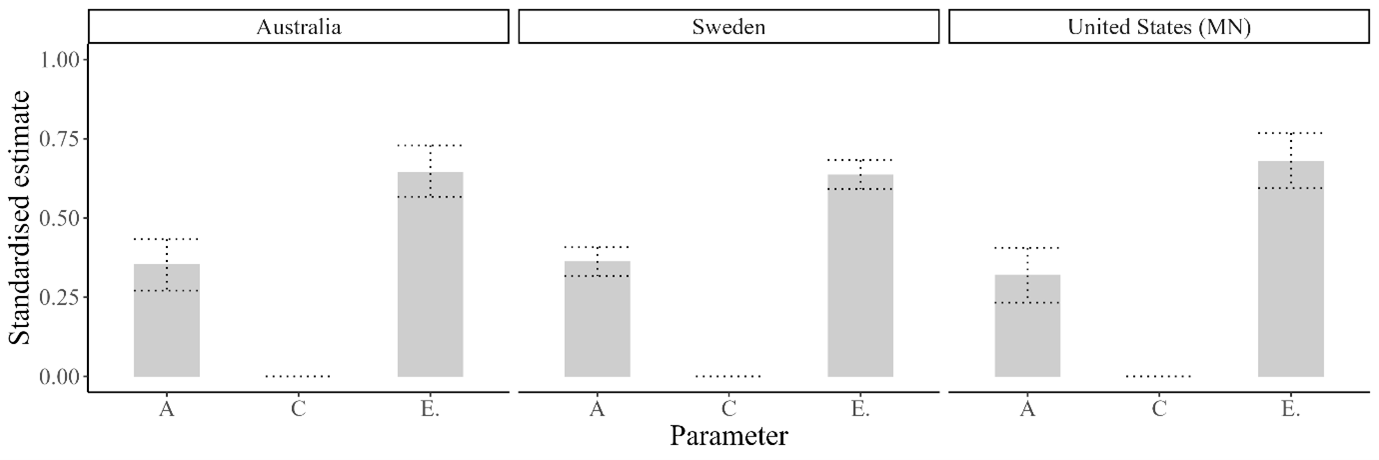
People are interested in political distrust because we normally assume that it is caused by poor government performance and that it has negative consequences, especially for political participation. In this paper, we challenge these two assumptions.
Leave a Comment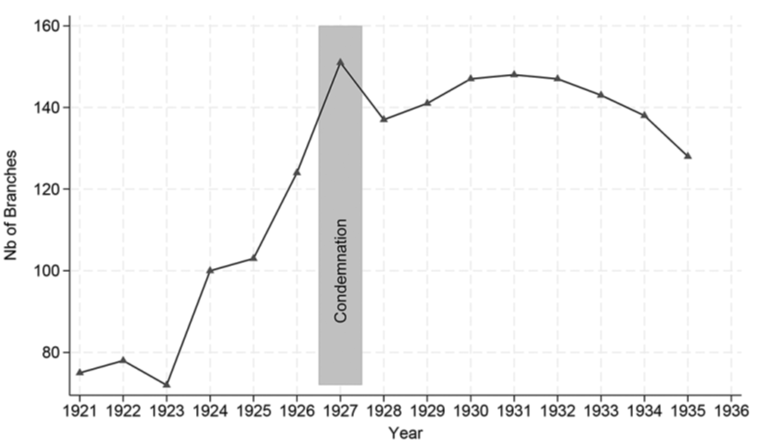
Political extremism is often attributed to voter anger and broader structural socioeconomic conditions. From this perspective, efforts to counter extremist movements may appear futile, since such groups are seen as deeply embedded in the contexts from which they arise. But is this necessarily the case? To address this question, we examine the Papal condemnation of an influential far-right movement in interwar France.
Leave a Comment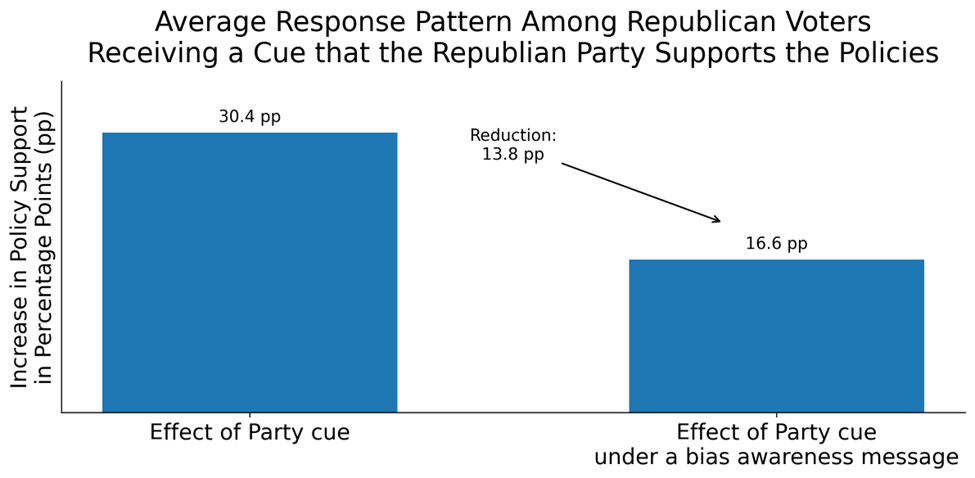
One of the strongest findings in political behavior research is that people often take cues from their party when forming opinions. If their party supports a proposal, they are more likely to support it too. If the opposing party supports it, they often move the other way. In a polarized age, that pattern matters. It suggests that citizens may sometimes respond less to what a policy does than to who backs it.
Leave a Comment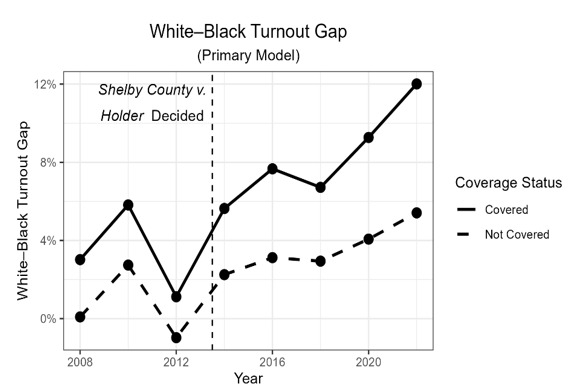
As the Court again weighs the fate of the Voting Rights Act, new research shows that 2013’s Shelby County v. Holder (an earlier decision that hollowed out the law’s protections) dramatically increased the racial turnout gap.
Leave a CommentBy Ori Swed, Texas Tech University, and Bryan Giemza, Texas Tech University
In 2014, Russia changed the information landscape by utilizing mass production tactics and building on surveillance capitalism tools to flood Ukraine with disinformation. Similar campaigns, on a larger scale, aimed at influencing the 2016 US Presidential elections brought these tactics into the light. That campaign involved deploying hundreds of workers to animate bots and fake accounts across multiple social media platforms, all managed from a troll farm in St. Petersburg.
Leave a Comment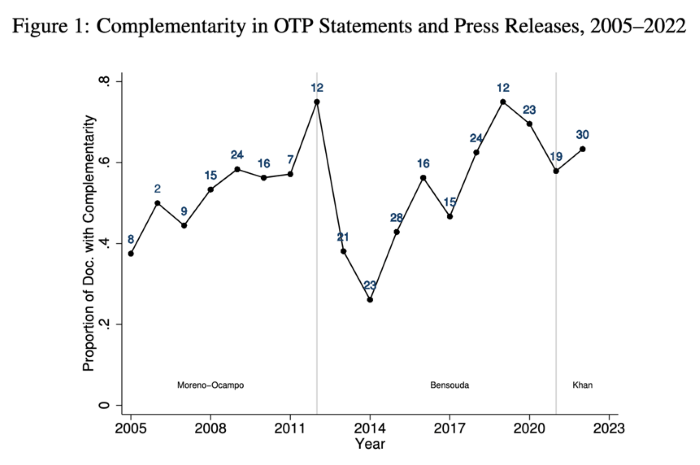
An image problem For international courts to function effectively, they require the support of citizens in the countries they investigate. Sometimes, this support is easily attained, as seen when Ukrainians…
Leave a CommentBy Francesco Bromo, University of Oxford, and Paolo Gambacciani, University of Bologna
In recent years, artificial intelligence (AI) has begun to reshape nearly every aspect of modern life, including the very fabric of representative democracy. From machine learning tools that classify legislative documents to natural language processing systems capable of summarizing plenary debates, AI is increasingly becoming embedded in parliamentary life. For political scientists, this transformation is not merely a matter of technological innovation or organizational change; it potentially represents an impending shift in how we study politics.
Leave a Comment
In the early 1990s, the growth of independent media played a vital role in Africa’s democratic transitions. New outlets broke state monopolies, promoting accountability and pluralism. But media freedom has…
Leave a Comment