

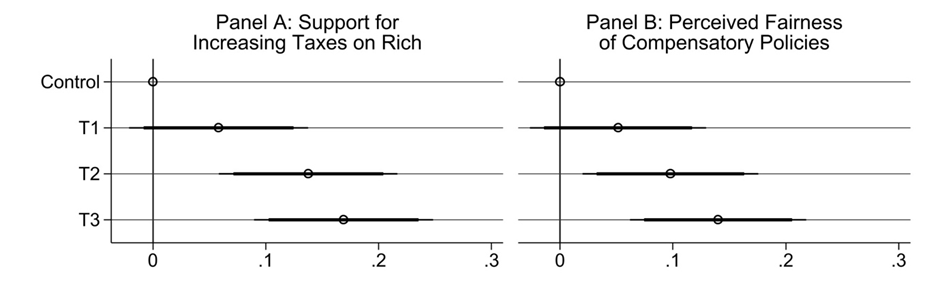
According to the compensatory theory of tax fairness, people support raising taxes on the rich when they perceive them to have benefited from unequal state action. This idea has been used to explain the historically high top marginal tax rates following the two world wars. In this context, while the poor were risking their lives for their country, many argued that the rich were not sacrificing as much —and some were even benefiting from the war industry. Higher taxes were thus seen as a way to compensate for this unequal treatment by the state and ensure that the war burden was shared more fairly across society.
Leave a CommentMonth: May 2026
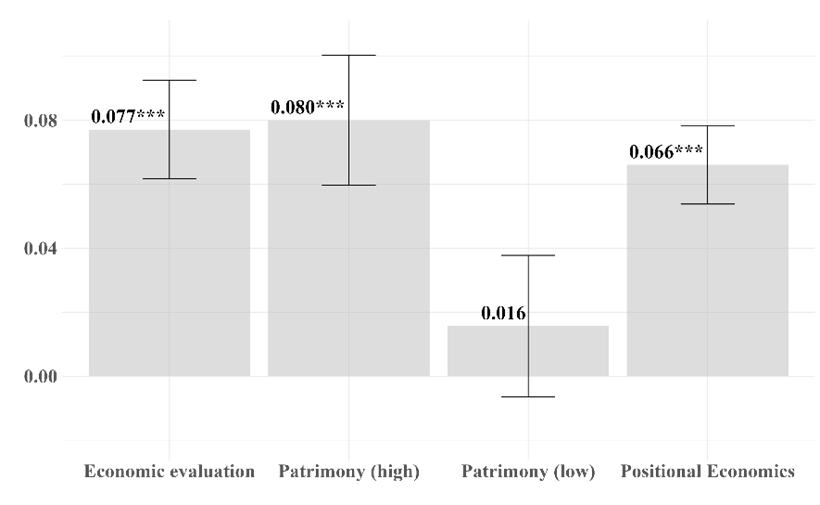
The conventional story of economic voting is simple: when the economy does well, incumbent governments get re-elected; when it is in decline, they get punished. But advancements in the economic voting literature suggest that the compleat economic voter is multidimensional, with valence (i.e., the assessment of economic performance) as only one dimension, alongside economic policy position and patrimony (i.e., ownership of assets).
Leave a Comment