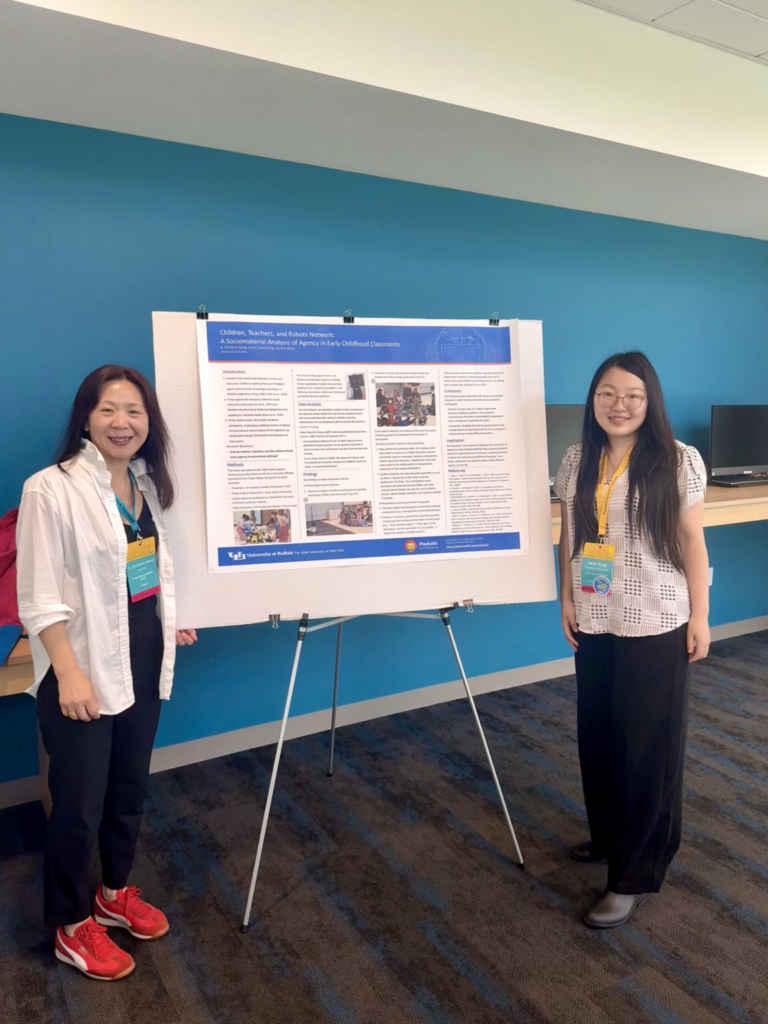
PlayfulAI Lab Presents Seeds of AI Research at ICLS 2026
Dr. X. Christine Wang and Grace (Yaxin) Xing presented their research at the 2026 International Conference of the Learning Sciences (ICLS) in Irvine, California. Their structured poster, “Children, Teachers, and Robots Network: A Sociomaterial Analysis of Agency in Early Childhood Classrooms,” was featured in the symposium “Artificial Intelligence and Human Purposes: Dialogues about Creativity and Control.”
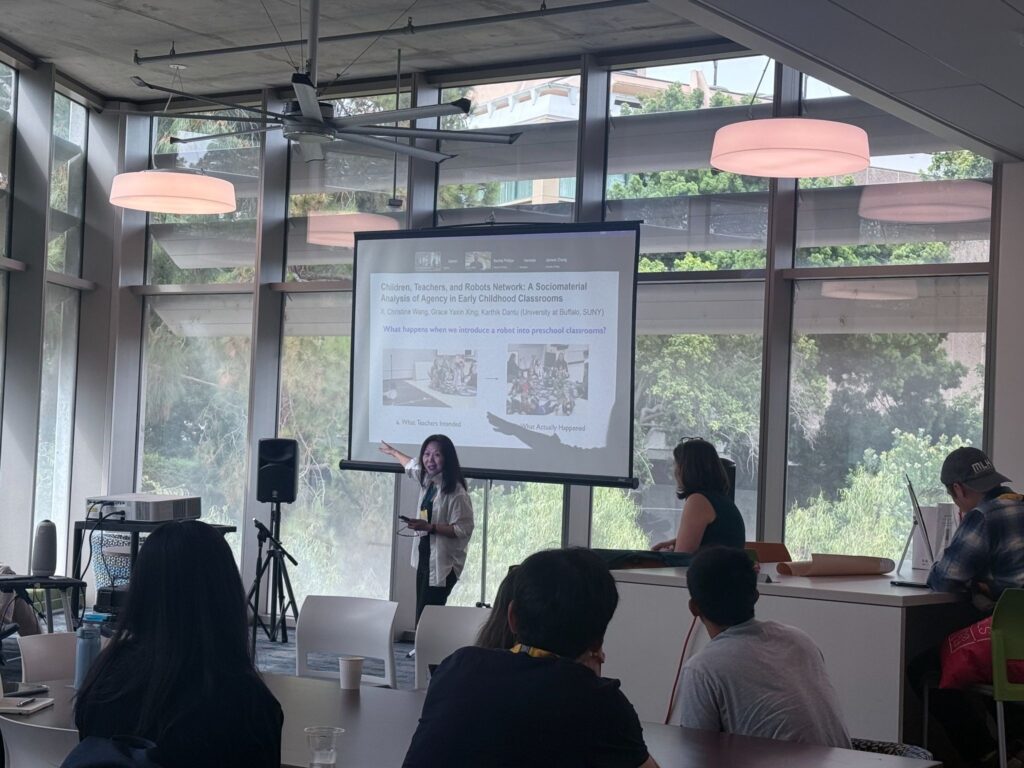
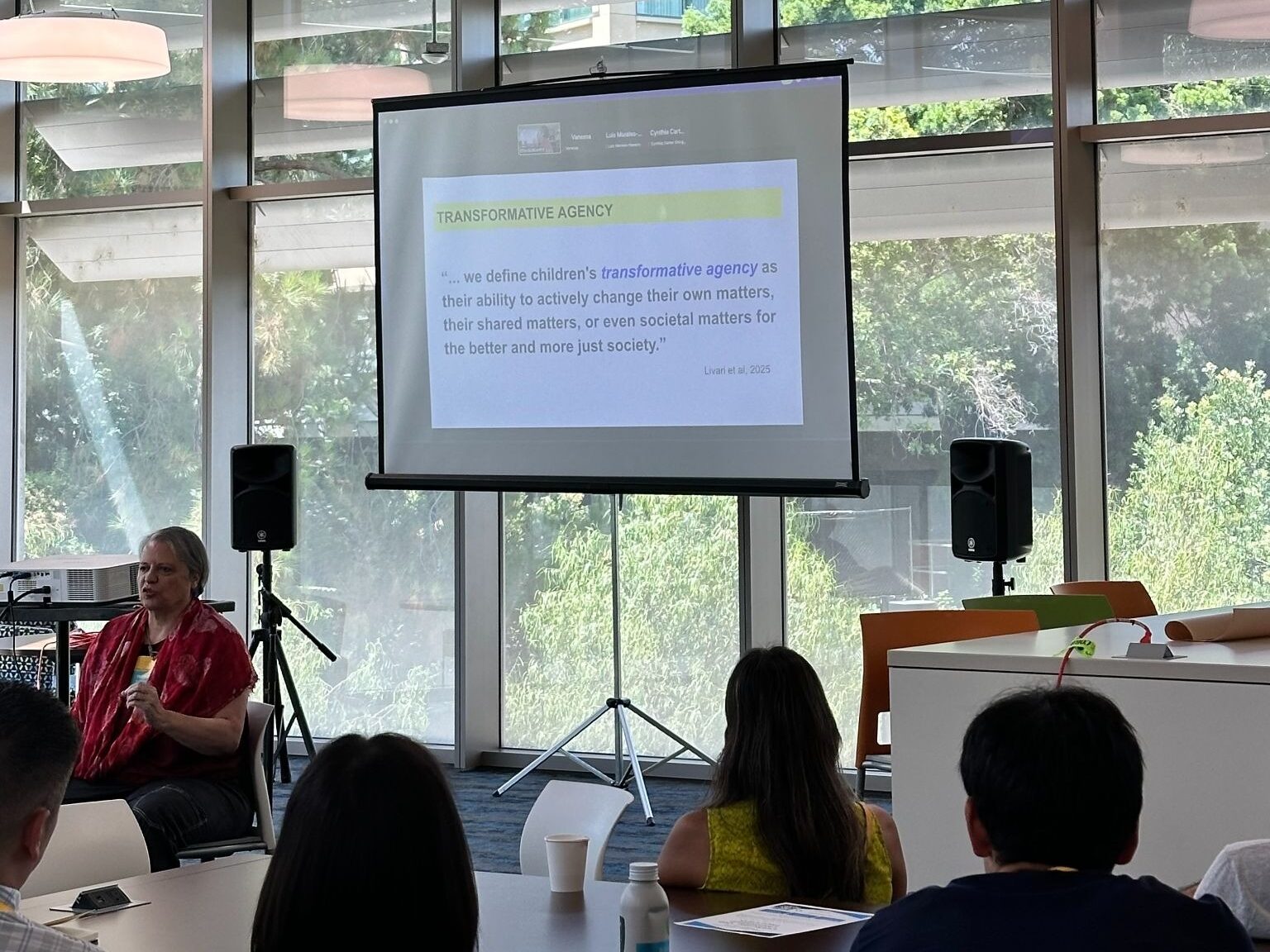
Organized and chaired by Dr. Cynthia Carter Ching (University of California, Davis), the symposium brought together researchers examining how AI is reshaping learning, creativity, and human agency while centering the voices and experiences of young people. Rather than a traditional symposium session, the symposium adopted an innovative structured-poster format. Each research team first delivered a brief “pitch” introducing their work to the audience, followed by two rounds of interactive poster discussions that allowed participants to engage in deeper conversations with attendees. The symposium concluded with an insightful synthesis and discussion by Dr. Yasmin Kafai (University of Pennsylvania), who highlighted emerging themes and future directions across the presentations.
Drawing on data from the Seeds of AI project, Wang and Xing examined how the introduction of AI-powered social robots reconfigured classroom interactions in early childhood settings. Using a sociomaterial perspective, their research explored how agency emerged not only through children’s and teachers’ individual actions, but also through dynamic relationships among children, educators, AI technologies, classroom materials, and learning activities. Their findings illustrate that AI is not simply another classroom tool; rather, it actively reshapes patterns of participation, collaboration, and learning by creating new networks of agency within the classroom. The presentation generated engaging conversations with researchers from around the world about how young children’s lived experiences with AI can inform more human-centered and responsible approaches to designing AI for education.
Congratulations to Dr. Wang and Grace on representing the PlayfulAI Lab and contributing to this timely international dialogue on AI, learning, and human agency.