Instructor: Mark Shepard
ARC 606: Situated Technologies Graduate Design Research Studio
Spring 2026
DESCRIPTION:
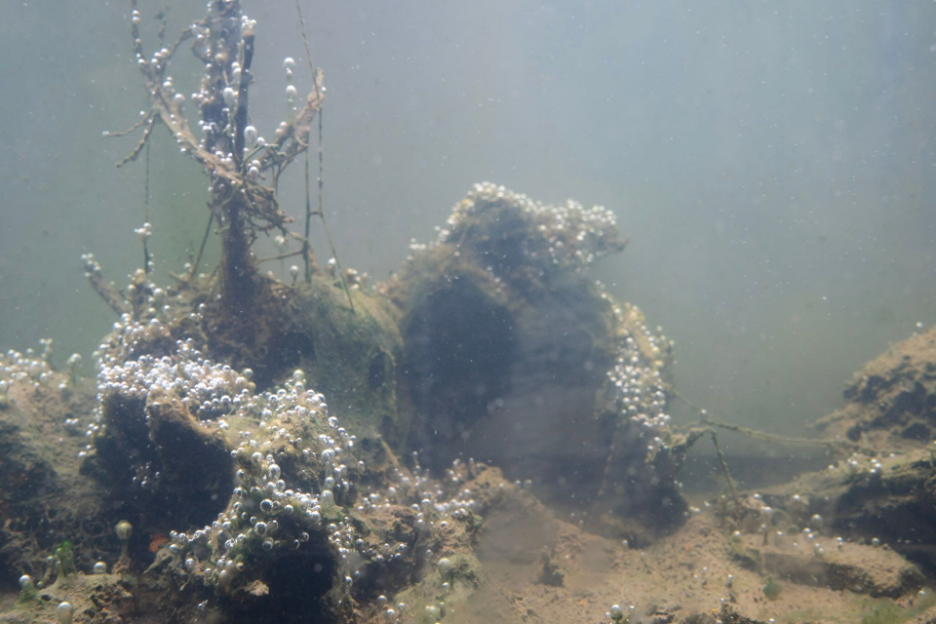
The Spring 2026 Situated Technologies Graduate Design Research Studio will address the design of green infrastructure for multispecies urban environments, with a focus on integrating environmental sensing systems into urban landscapes. The integration of natural systems into urban design is an emerging focus in architecture, landscape architecture, and planning. We will investigate the design of green infrastructure that provides certain ecological services, such as habitat support, stormwater management, and climate regulation. We will embrace the fact that cities are rapidly becoming hubs of evolution where multiple species adapt to new conditions, and study how to integrate nonhuman needs into architecture and urban design. We will ask how – as architects – we might take the lead in an evolving field that places greater emphasis on ecological interdependence and fostering interspecies interaction. Finally, we will research and develop strategies for the integration of environmental sensing technologies in monitoring and observing urban ecosystems – an emerging practice that enables the design of responsive, data-driven urban landscapes.
Our site will be located within the Gowanus neighborhood in Brooklyn, along the Gowanus Canal. The system of creeks and estuaries in the Gowanus lowlands was dredged in 1869. With the decline of domestic shipping since the mid-20th century, the canal has seen decreasing use and has become one of the most polluted bodies of water in the United States. In 2010, the Environmental Protection Agency designated the Gowanus Canal a Superfund site, allocating $506 million for the cleanup of decades of industrial pollution and sewage contamination. While the cleanup continues, the area is becoming one of the city’s most ambitious development sites. More housing is going up right now in Gowanus than anywhere else in the city.
The studio will begin by researching the nonhuman urban inhabitants of the Gowanus Canal and developing design criteria for habitat support and ecosystem interactions. We will identify and investigate technologies for sensing and observing more than human urban life and explore how they might reorganize how we interact with our broader shared environment. Following spring break, we will make a site visit to NYC, where we will meet with specialists in computational biology and urban horticulture, make studio visits to the studios of multispecies design practitioners, and visit significant examples of urban landscape interventions and green infrastructure projects distributed throughout the city. Upon returning from NYC, we will organize into teams. Each team will select a site along the Gowanus Canal and develop a design proposal for an urban landscape intervention that supports two or more species of urban inhabitants, integrating a simple environmental sensing platform to foster some form of interspecies interaction.

ARC 619: Architectural Geometry and Construction
Instructor: Nick Bruscia | Type: Seminar
This technical seminar introduces computational modeling and simulation in architecture, focusing on geometric principles and digital workflows that connect form-finding, material behavior, and fabrication through algorithmic modeling and physics-based simulation tools.
ARC 404: Digitizing and Designing Toward Spolia
Instructor: Nick Bruscia | Type: Studio
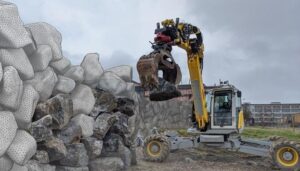
This studio explores the design and construction of dry-stacked masonry systems using recycled architectural stone, combining digital scanning, computational modeling, and mixed-reality tools to translate irregular salvaged materials into structurally legible assemblies.
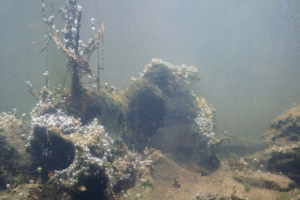
ARC 606: Mediating and Remediating Gowanus
Instructor: Mark Shepard | Type: Studio
This graduate design research studio investigates green infrastructure and environmental sensing systems for multispecies urban environments, focusing on ecological restoration and responsive landscape interventions along Brooklyn’s Gowanus Canal.